the guitar
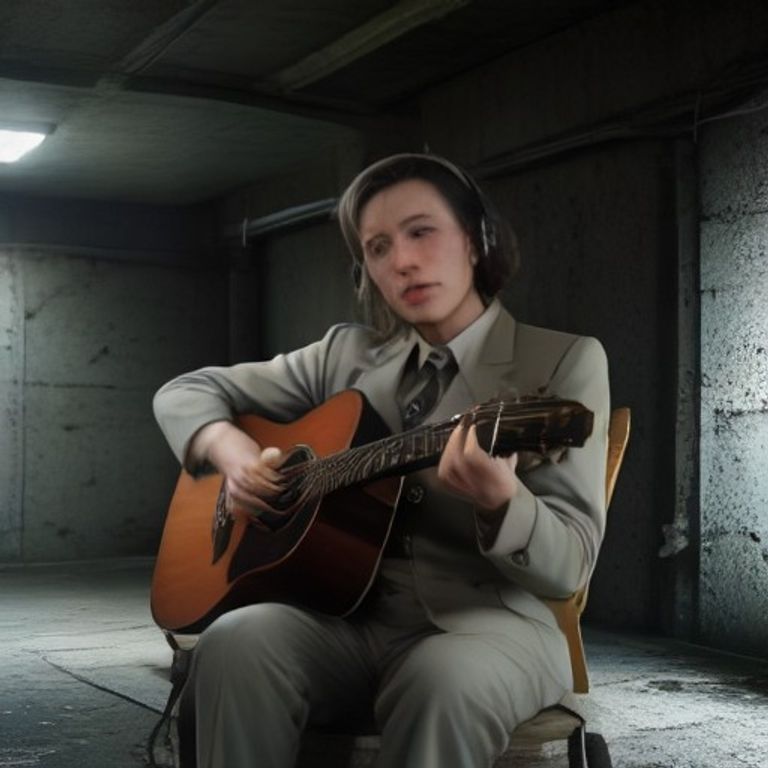
Andy Burnham became Prime Minister of the United Kingdom in May. He has not been to many countries yet. He has been to Ukraine.
This is not unusual. British Prime Ministers travel to Ukraine. This has become expected in the way that visiting Washington is expected, or attending the G7 summit, or standing in front of a flag and saying something measured about ongoing developments. Burnham went to Ukraine, met with President Zelensky, and discussed military and humanitarian support. All of this is consistent with what a British Prime Minister in 2026 is expected to do.
What is slightly less expected, in the documented record of wartime diplomacy, is that he also brought a guitar.
There is footage. In the footage, Burnham is sitting in what appears to be a military environment, playing an acoustic guitar. Ukrainian soldiers are present. They appear to be listening, or at least near the performance. This is the kind of footage that different people describe in different ways. His communications team described it as a moment of human solidarity. Several journalists described it as unexpected. A number of people online described it as other things. Those descriptions are not quoted here, partly for length and partly because many of them used language that is difficult to include in a website entry and remain a family-friendly publication, which this is not, but still.
The guitar was acoustic. This matters because it affects range. An acoustic guitar carries sound across a room, perhaps two rooms if conditions are favorable. A room is smaller than Ukraine. This is a factual statement and not a metaphor, though it also works as a metaphor.
Burnham spent approximately forty-eight hours in Ukraine. He met officials. He expressed solidarity. He played guitar. He flew home to England. These things happened in some order on Wednesday and Thursday of this week.
When he left, the soldiers he had visited did not leave with him. This is because they are fighting a war, and wars proceed on their own schedule, which does not typically include a departure window aligned with the British Prime Minister's calendar. The guitar, one assumes, returned to England with Burnham. The soldiers stayed in Ukraine. This is a reasonable sentence that contains everything you need to know about the visit.
Burnham has also announced that he plans to travel to Washington next month, where he will join other European leaders to lobby President Trump on the subject of Ukraine support. The guitar will, according to all available information, remain at home. He will make arguments. Arguments and guitar playing are both forms of persuasion, and it is interesting that he is using them in that order, with the guitar deployed first among the people who already agree with the general position and the arguments to follow with the person who does not.
There is a historical comparison available. During the Second World War, Winston Churchill made multiple visits to active theatres of conflict. He traveled to France, to North Africa, to Casablanca, to Tehran. He was known for his rhetoric, his cigars, and his extraordinary capacity for alcohol. He was not, in any documented account, known for playing guitar. This is not a statement about relative quality of Prime Ministers. It is a statement about what Prime Ministers have historically chosen to pack.
Tony Blair played guitar. He played it at Downing Street on at least one occasion and was photographed doing so. He went on to make several policy decisions that were unrelated to the guitar, and which are generally evaluated on their own merits separately from his guitar playing. This suggests that being a Prime Minister who plays guitar is not inherently linked to any particular policy outcome. It simply describes a Prime Minister who also plays guitar.
What Burnham's visit to Ukraine accomplished in terms of diplomatic substance is unclear from the available footage, which focuses primarily on the guitar. What it accomplished in terms of optics is more legible: it produced a photograph of a British Prime Minister playing guitar with Ukrainian soldiers in a bunker, which was shared widely, which is the kind of thing that photographs do when they are produced with this intention in mind.
The soldiers he visited are still in Ukraine. They have presumably heard that he is going to Washington. They have not been asked for comment. They are, again, busy.
The guitar is somewhere in England. It is having a quieter week.