329. The Pipeline
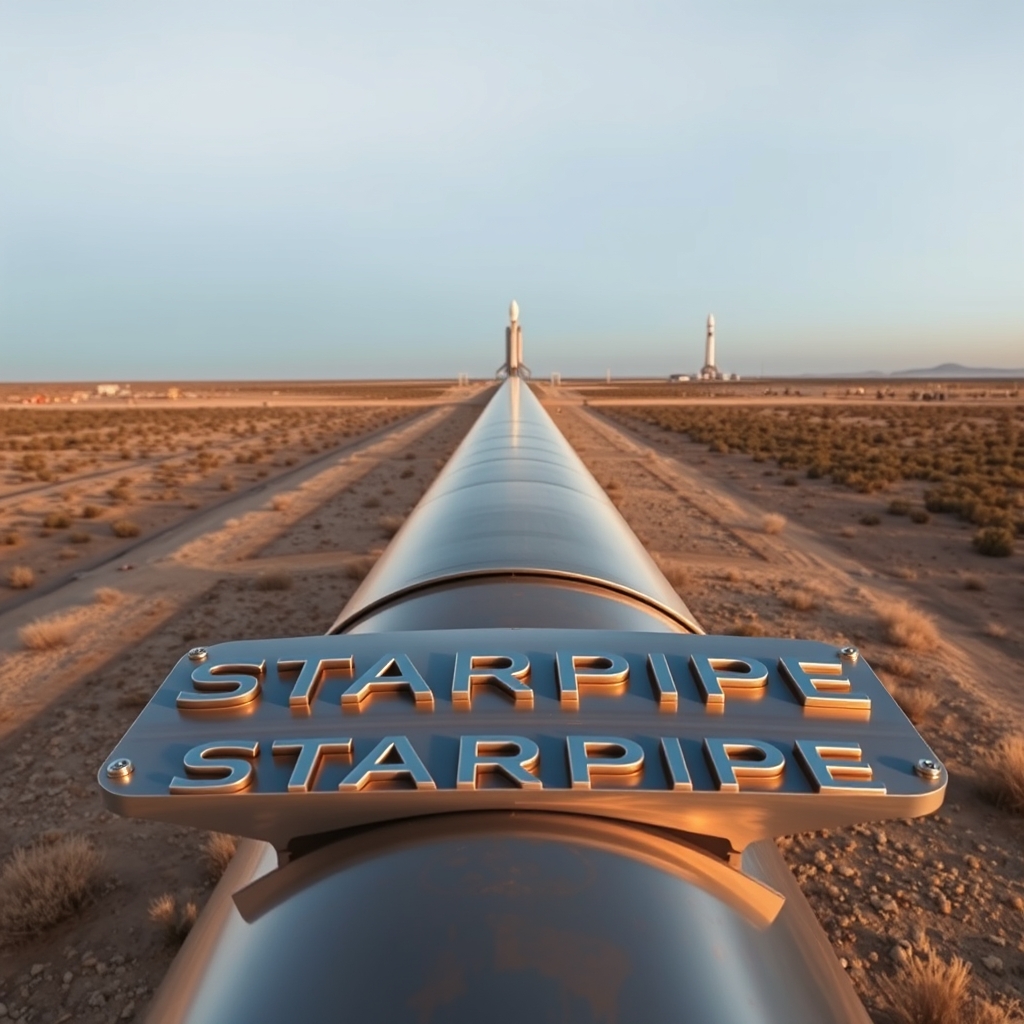
SpaceX, the company that builds rockets that go to space, has announced plans to build an eight-mile natural gas pipeline in Texas. The pipeline will carry natural gas to the Starship launch facility at Boca Chica. This is plumbing. Eight miles of it, buried in South Texas, doing what natural gas pipelines have been doing since the 1930s, which is carry gas from one place to another.
The pipeline is called Starpipe.
(I want to stay with this for a moment. The company makes rockets called Starship. It makes satellites called Starlink. It makes internet hardware called Starshield. And now it has an eight-mile natural gas pipeline called Starpipe. The word "Star" has been applied to a rocket, a satellite constellation, a cybersecurity product, and now a length of pipe that carries gas through scrubland. I am not saying this is wrong. I am saying the naming convention has reached its natural terminus, and it is a fuel line.)
SpaceX, to be fair, uses an enormous amount of natural gas. Starship, the largest rocket ever built, runs on methane. The Boca Chica facility uses methane at a scale that requires dedicated infrastructure. The pipeline makes sense. It is a legitimate industrial solution to a genuine logistical problem. Elon Musk has, on multiple occasions, discussed the importance of vertical integration, meaning that if you need a thing, you should build the thing yourself rather than depend on someone else to provide it.
The thing, in this case, is a gas line.
(There is something I find clarifying about this. SpaceX has built the most powerful rocket in human history. It has landed and reflown orbital boosters. It has supplied the International Space Station. It is attempting to make humanity multi-planetary. And at some point in that process, someone sat down and decided the bottleneck was eight miles of pipe, and that the pipe should be named.)
The federal permitting process for the pipeline has reportedly begun. The pipeline will need approval from the relevant Texas and federal authorities. This is standard for natural gas infrastructure. Pipelines require permits. The word "Star" does not accelerate the permitting process. The gas will move at the same speed regardless of what the pipe is called.
Starpipe is expected to be operational in 2027. When it is complete, it will carry natural gas from existing Texas supply lines to the Starship facility, where the gas will be used to fuel rockets that will attempt to land on other planets.
The pipe itself will remain on this one.