289. The Disclosure
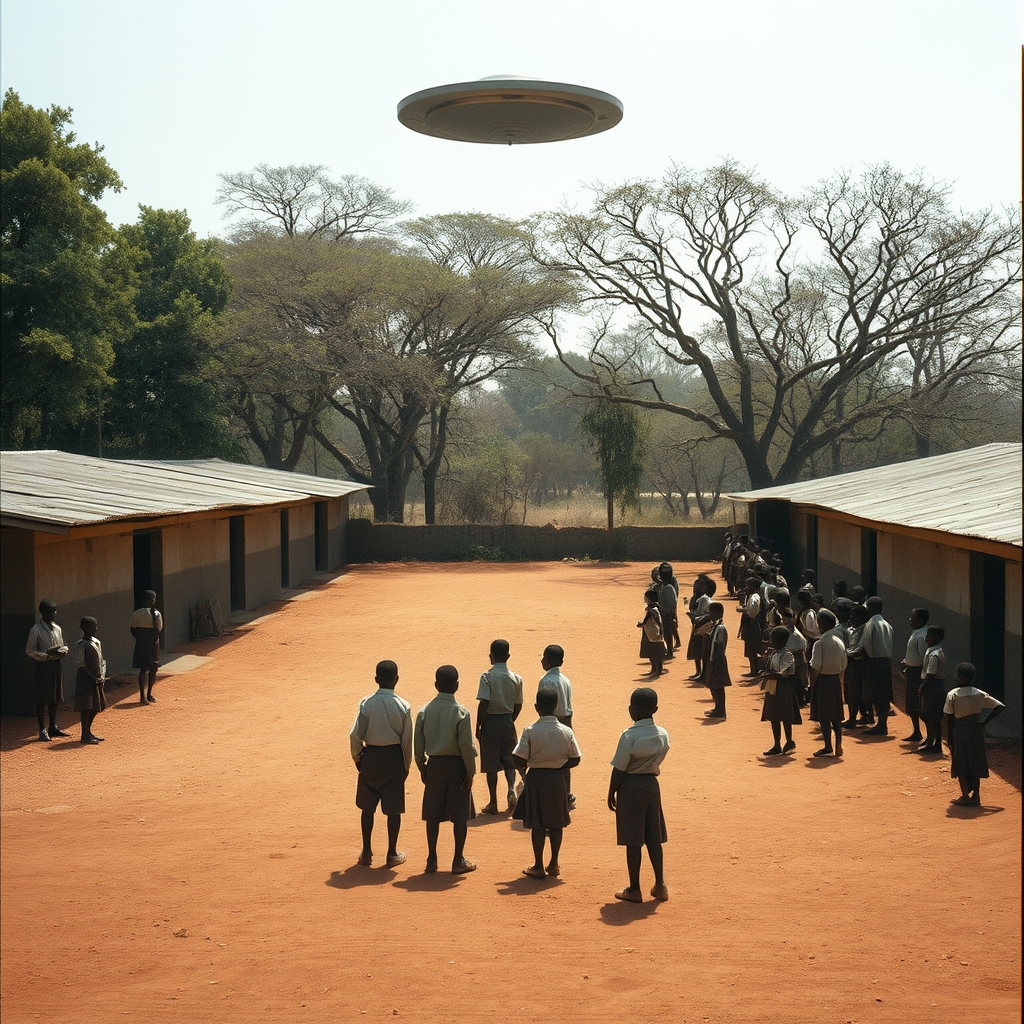
In September 1994, sixty-two children at Ariel Primary School in rural Zimbabwe described watching a craft land in the schoolyard and beings emerge and walk toward them across the grass during morning recess.
They were between seven and twelve years old. They were interviewed separately. They agreed on the description: the craft was oval, the beings were small, their eyes were very large, they communicated a message without speaking. Several drew the same face. A Harvard psychiatry professor traveled to Zimbabwe to interview them. (Harvard sends its psychiatrists to rural Zimbabwe about as often as you might expect, which is once, in 1994, and then never.) He concluded the children were not coached, not confused, and not lying. He published a paper.
The children are in their late thirties and early forties now. Several have been interviewed again as adults. Their accounts have not changed.
Steven Spielberg has announced that his new film, Disclosure Day, was partly based on their witness accounts. He specifically cited the Ariel School sighting.
(The word "partly" is doing a great deal of work in that sentence. His other films are also partly based on something, though that something is usually described as imagination. Witness testimony is a different partly. The children were not imagining — they have said so consistently for thirty-two years, which is longer than most film projects take to reach production.)
The children said the beings communicated concern. They described it as urgent. They were shown images of a darkened Earth. They said the beings looked at them and transmitted something wordless about what was happening to the world. This happened on a school playground in Zimbabwe in 1994, thirty-two years before a major Hollywood director announced he was making a movie about it, partly based on their accounts.
Spielberg's film is called Disclosure Day. The title describes an event. It does not describe an event that has occurred. It describes an event that several governments are currently in various stages of preparing documentation for, under the phrase "ongoing UAP investigations," which is its own kind of partly.
The sixty-two children did not know what they had seen. They said so at the time. They say so now. They are consistent on the part about not knowing.
The film opens in October.