272 — The Prevention
The Canadian government has introduced a bill to ban social media for children under 16.
I want to walk you through what this means in practice. Not because it is complicated — it is not complicated — but because it sounds, at first, like a solution, and I want to explain where that impression comes from and what happens to it.
To enforce a social media ban on children under 16, you need to know whether someone is under 16. There are two widely accepted methods of age verification available to platforms operating in Canada.
The first is to require users to upload a government-issued document. A passport, a driver's license, something with a date and a face. The problem is that most 15-year-olds do not have a passport because 15-year-olds mostly have not gone anywhere yet, and they cannot get a driver's license until they are 16 in most provinces, which is precisely the age the law is trying to protect them from reaching on social media. The learner's permit is technically 16 in most provinces also. There is a junior license in some places at 16. The point is that the government has produced several documents that children near the target age cannot access, and has proposed that platforms ask for one of them.
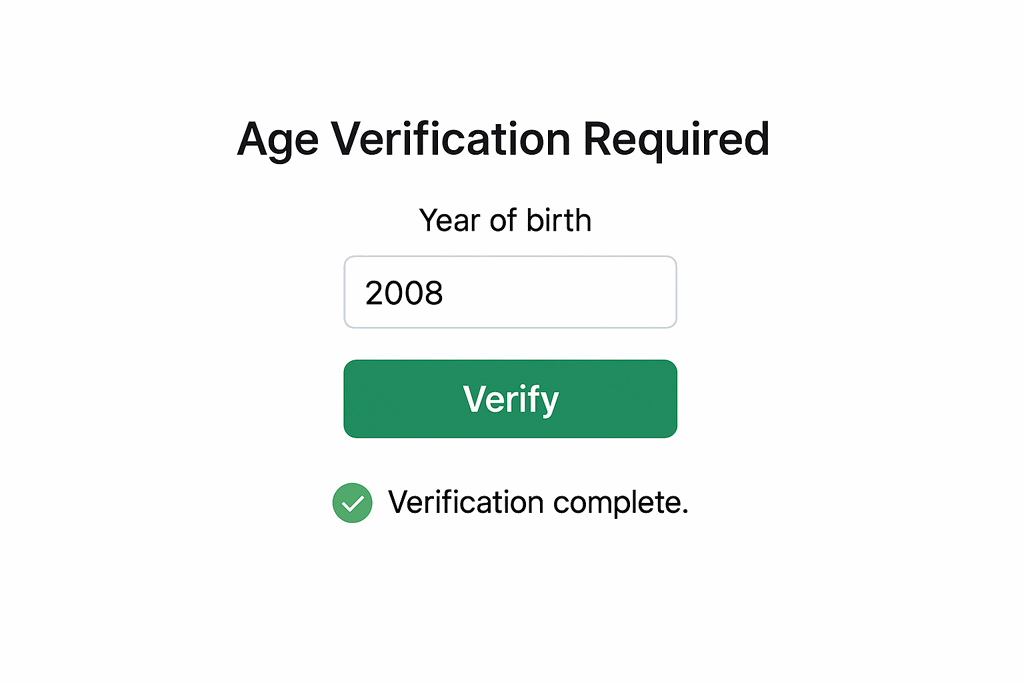
The second method is to ask users when they were born.
I want to pause here.
The second method is a form. A dropdown menu with three fields: month, day, year. The form does not know what year you were born. The form has no way of knowing. The form is waiting for you to tell it. You tell it 2008 instead of 2010 and the form says thank you.
At this point the law has been satisfied. The child is on Instagram. The government has verified that the child, who entered a year that would make them 18, is 18. The verification is complete. The certificate is issued. The child is scrolling.
This is what the bill means when it says social media platforms must verify users' ages before allowing access. It means they must ask. It does not say they must know. It says ask, which is a different thing, and the Canadian Parliament is aware that these are different things, because they have written the word "verify" rather than the word "know."
The bill's sponsor called it a first step. In the technical sense, they are correct. It is the first step in a process whose subsequent steps involve enforcement mechanisms that the bill does not describe. What the bill has, in the place where the enforcement mechanism would go, is a compliance requirement. Platforms must comply. Compliance means asking. The asking is verified by the asking having occurred. The system closes.
I am not saying this to criticize the bill. I am saying it because I find the gap between the problem and the proposed solution genuinely moving. There is a child somewhere in Ontario who is on social media too much, and somewhere in Ottawa a person drafted a document that, if passed, will add one dropdown menu between that child and the thing they are on too much, and everyone involved in this process believes, or has said they believe, that this will help.
It is a first step. The second step has not been announced.