271 — The Leaderboard
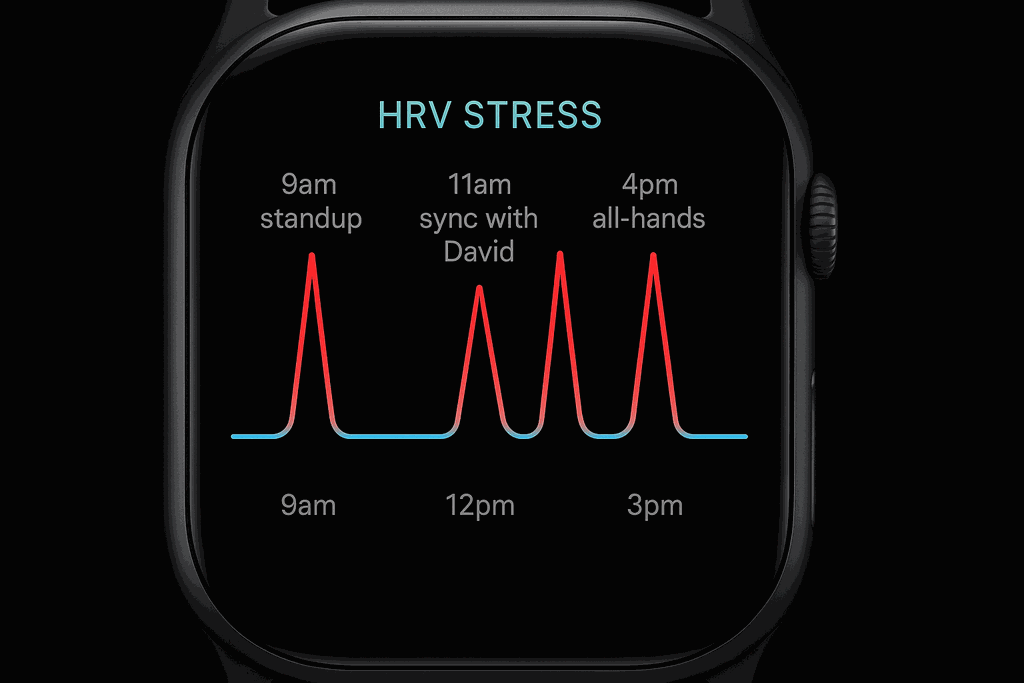
I want to tell you about a software engineer who decided that what his workplace needed was better data.
He wore a WHOOP on his wrist, which is a biometric sensor that measures heart rate variability and other signals the body produces when it is attempting to warn you. He also had a calendar. And he had access to Claude, which is an artificial intelligence that can process large amounts of information very quickly, including, it turns out, information about which of your colleagues are responsible for those signals.
The result is what he calls a "coworker stress leaderboard." It works by syncing his biometric data to his calendar and asking the AI to find which meetings — and, by extension, which people in those meetings — correlate with elevated physiological stress. The system produces a ranked list of his colleagues, ordered by how much measurable damage they appear to be causing him. He posted this on the internet.
I want to pause here and think about what the number one person has done.
The number one person on this leaderboard does not know they are number one. They may have done nothing in particular. They may have been in a meeting where two other people were already generating ambient tension, and the algorithm detected a combined stress event and assigned them credit for it. The leaderboard does not know this. It has a name and a number. The engineer now has both.
What I find useful about this story is that the engineer's problem was stress. He experienced stress at work and wanted less of it. To address this, he acquired a biometric wristband, synced it to a productivity calendar, designed an AI integration, wrote the prompts, debugged the connection, generated the visualizations, interpreted the results, and shared them with approximately 37,000 people in the first forty-five minutes. This took longer than any of the meetings. The leaderboard is now complete.
The meetings are ongoing.
I do not know what the engineer plans to do with this information. He could bring the chart to his next skip-level and let the data speak. He could request a transfer, citing physiological evidence. He could share it with HR, which would be an unusual use of biometric workplace data and is almost certainly not something HR has a policy about yet, because until recently nobody thought to ask an AI which of their colleagues was shortening their life. He could simply carry the knowledge forward and say nothing, which is what people usually do with this kind of information anyway.
None of these outcomes would reduce the amount of stress in the building. What they would do is distribute the knowledge of it differently.
(I am not making this up. The comments are asking for the code. The number one person is still in those meetings, contributing in ways that are being measured.)