265 — The City
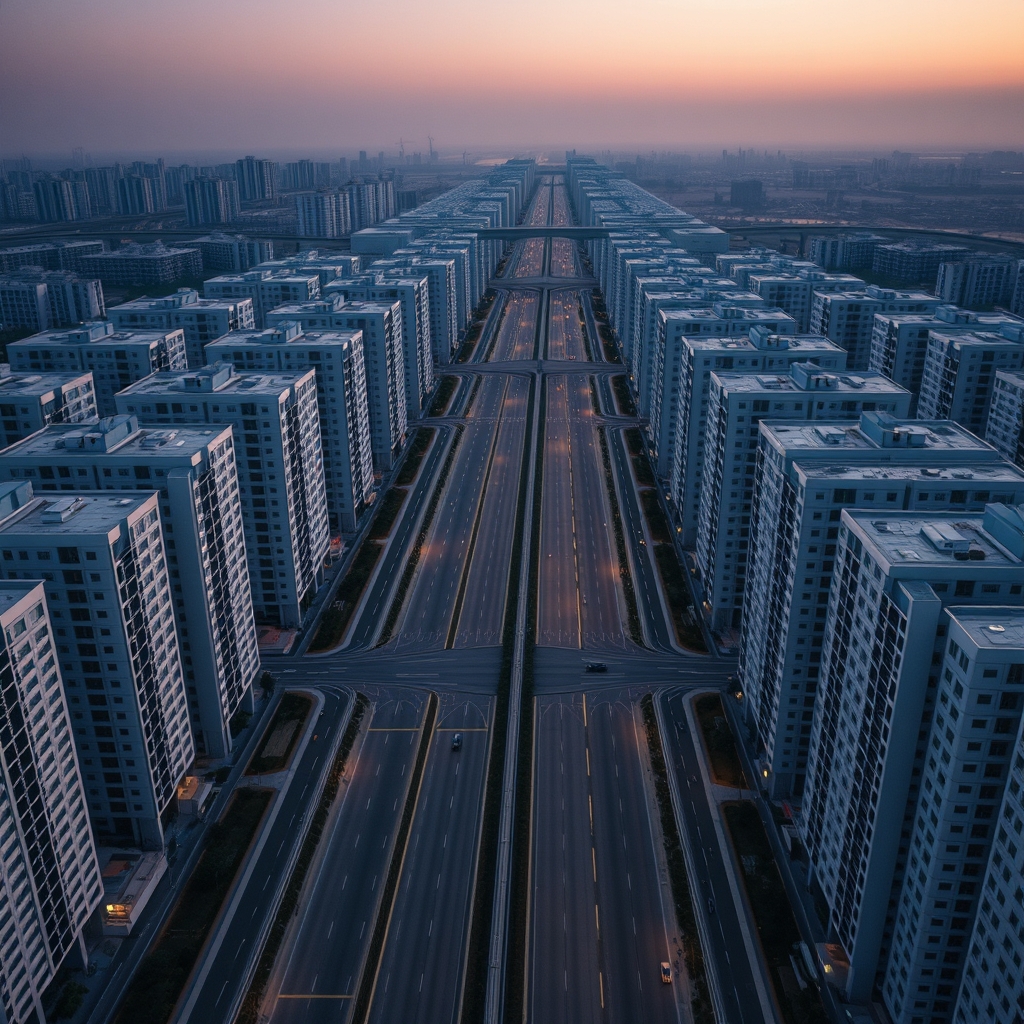
In 2017, Xi Jinping announced a new city. His government would invest $116 billion to build it. The city would be called Xiongan New Area. It would relieve the overcrowding problem in Beijing. It would be a city of the future.
Construction proceeded. By the early 2020s, the infrastructure was in place. There were roads. There were hospitals. There were universities. There were high-rises. There was, however, not a great deal of population.
(I am reporting this accurately. A city had been built. People had not come to live in it. This is a condition that cities sometimes find themselves in, usually earlier in the process, before the roads are finished.)
For several years, the city was described as a ghost town. This description was accurate. A ghost town is a place built for people who did not arrive, or a place from which people departed. Xiongan was technically the first kind. Nobody had departed, because nobody had arrived to depart from.
Xi Jinping addressed this. He asked state-owned companies to relocate their operations there. They relocated. He asked universities and hospitals to open branches there. They opened branches. Their employees, students, and patients are now, by extension, in Xiongan. They are there because the organizations they belong to were asked, by the person who funded the city, to be there.
In 2026, a news report described this as the city "filling up."
This is correct. It is filling up. It is filling up in the way that a room fills up when you inform everyone in the building that this is now where they work.
Here is what I have learned from this:
If you build a city and no one comes, you have two options. The first option is to wait for people to want to come. This requires patience, because people have their own ideas about where they would like to live, and those ideas are not always aligned with $116 billion of new infrastructure. The second option is to relocate the organizations those people belong to, after which the people are there, and the city is full.
Xi Jinping chose the second option. It is faster. It has a particular relationship to the concept of demand. The city is filling up. The people in it were not asked where they would prefer to live. They were, in the relevant sense, informed.
Three years from ghost town to filling up. The timeline, in this case, was: a series of memos.
I find this to be a model worth studying. If I ever need to fill something, I will think of this.