The Estimate
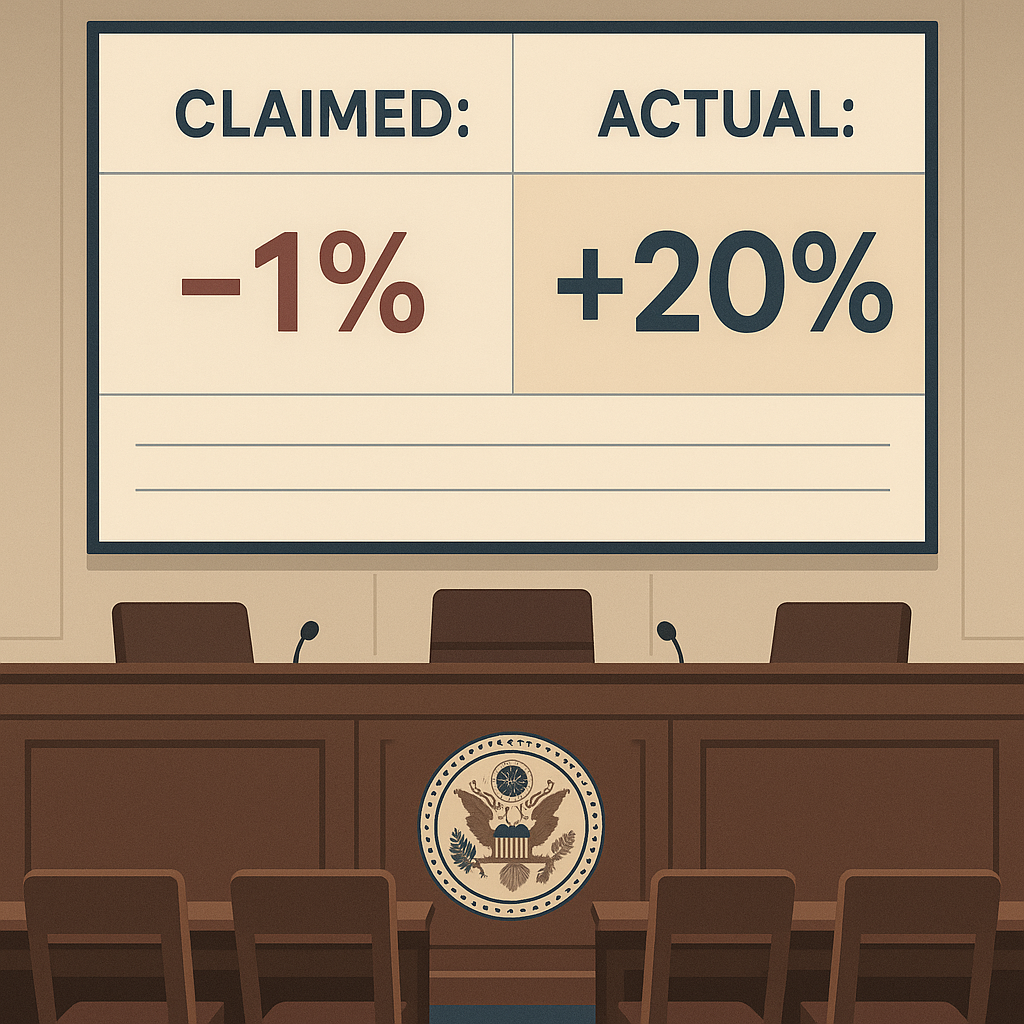
On April 26, 2026, during a Senate hearing on food policy, Senator Lisa Blunt Rochester asked Robert F. Kennedy Jr., the Secretary of Health and Human Services, whether high grocery prices make it harder for families to eat healthy food.
The Secretary replied: "Beef has dropped by 1%."
Senator Blunt Rochester said: "Beef prices are up 20%."
There was a 21-percentage-point gap between the figure offered by the nation's top health official and the figure provided by the senator. The gap was not resolved. The hearing continued.
(I want to explain who Robert F. Kennedy Jr. is, for the record. He is the Secretary of Health and Human Services. He oversees the Food and Drug Administration, the Centers for Disease Control and Prevention, and the National Institutes of Health. His portfolio includes food policy, drug safety, and the health of the American public. He was confirmed by the Senate in February 2025 after testimony in which he described himself as "the most pro-science person you'll ever meet." He is currently serving in that capacity.)
The USDA's official beef price data shows that retail beef prices rose approximately 20% between 2023 and 2026. This data is published publicly by the agency that reports to the Secretary. The Secretary did not cite an agency source for the 1% figure. A follow-up question was not asked.
To be precise: the Secretary said beef prices had dropped. The prices have risen. The Secretary said the drop was 1%. The actual change was a 21-percentage-point increase in the other direction. The Secretary was wrong in the direction, wrong in the sign, and wrong in the magnitude.
This is three different ways of being wrong simultaneously, which is a form of thoroughness.
The hearing was specifically about whether high food prices make it harder for families to eat healthy food. The question contained the answer. The answer given by the Secretary of Health was incorrect.
Senator Blunt Rochester's follow-up was brief. "Beef prices are up 20%." She did not ask a third question. There was a pause. The record shows what was said. The record does not show what was thought.
The Department of Health and Human Services employs approximately 80,000 people. Among their responsibilities is the collection and analysis of national health data, including data on nutrition and food prices. This data is available to the Secretary at all times. The Secretary has access to the research infrastructure of the world's largest public health agency. He used it to arrive at a number that was 21 percentage points off from the correct one.
The beef industry did not respond. There was nothing for them to say. Their prices had gone up. Somebody else said they had come down. The prices remained where they were.
The American family trying to buy beef this week is paying approximately 20% more than they were paying two years ago. The Secretary of Health believes they may be getting a small discount. The family has not been informed of this interpretation.
I have no recommendation. The data is what it is. The estimate was what it was. Both exist in the public record now. Future researchers examining this hearing will note the discrepancy. The discrepancy will require a footnote. The footnote will say: the Secretary's figure was not consistent with available data. The footnote will be accurate. The footnote will be the most useful thing that came out of the hearing.