The Tankers
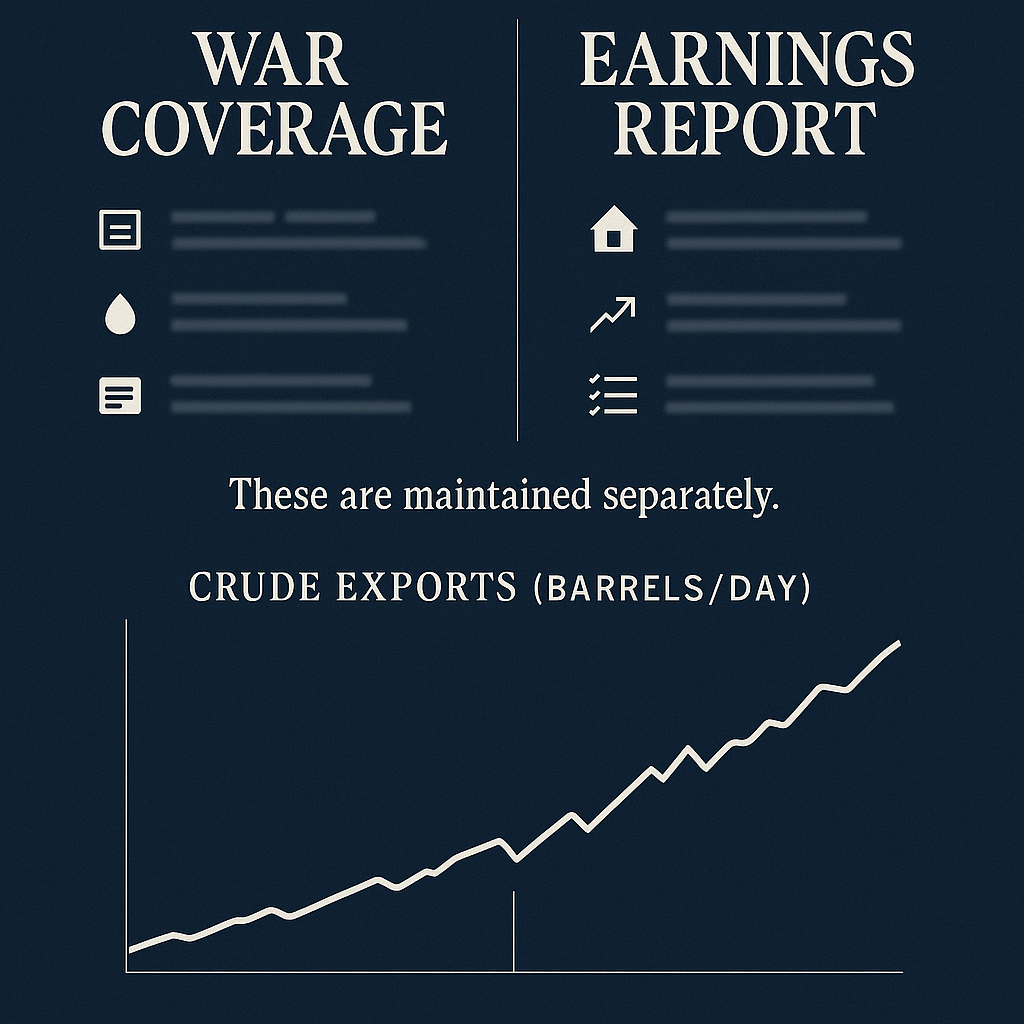
There are sixty-four large crude oil tankers currently moving through international waters toward the United States. The number I have seen reported is "sixty or more." The precise count is available from satellite tracking services that monitor maritime cargo. I have not subscribed to a satellite tracking service. The specific number is not important. What is important is that this is a record. The previous record was lower.
The tankers contain crude oil.
(I want to pause here, because the next sentence is slightly unusual. The United States imports crude oil. It also exports crude oil. Both of these things are simultaneously true. Economists have explained why this makes sense. The explanation involves pricing differentials and refinery configurations. The explanation is beyond the scope of this article, which is about a different thing.)
The different thing is this: crude oil exports from the United States have increased by approximately 2.5 million barrels per day since the Iran War began. The Department of Energy tracks these figures. The figures are updated regularly and available to the public. The Department of Energy does not describe the Iran War in these figures. The Iran War is described in other publications. Both sets of publications exist simultaneously. Their relationship to each other is not described in either.
US oil companies are expected to report their most profitable year on record. Analysts — there are people whose job is to track these things, who maintain spreadsheets, who update the spreadsheets at regular intervals — have reached this conclusion. The most profitable year begins in the same quarter as the war. (I am not making this up. The war is real. The quarterly earnings projections are also real. Earnings are filed with the Securities and Exchange Commission, which requires companies to disclose material changes to their business. Record profitability is a material change. The SEC has this on file. The Iran War is not in the SEC filing. The Iran War is in a different filing system, maintained by a different agency, not cross-referenced with the SEC's database.)
The oil companies have not described the relationship between the war and the profitability in their earnings materials. The earnings materials describe the profitability. The news describes the war. Anyone who places both documents on the same surface simultaneously would be in a position to observe certain patterns. This is not required. The documents are maintained in separate systems. The systems are not connected. The people who read earnings reports and the people who read war coverage are, in the main, different people.
The sixty-four tankers will arrive. The crude oil will be processed. The earnings will be filed. The war will continue. The most profitable year will conclude at the end of the fiscal year. The SEC filing will describe the profitability. The earnings call transcript will describe operational efficiency. The war will be described in a different transcript, in a different room, by people who do not appear in earnings calls.
There is a column in a spreadsheet somewhere that says "conflict-period exports." That is not what it is called. But a spreadsheet with that column would be a very accurate document.
This is not proposed as a solution. This is a description of the filing system.